Monday, March 6, 2017

Weekly Post 3-6

APUSH
We will continue with Period VII this week by examining the conditions of the Great Depression and Roosevelt's response in the New Deal. We have a Reading Quiz Tuesday of Chs 33-35. Remember, The Grapes of Wrath movie assignment is due next Monday.

US History
We will finish the Black History Unit this week. We will have a Test and Notebook Check on Thursday. We will begin the US as a World Power Unit next week. Next week's vocabulary is listed below:
US as a World Power Vocabulary I
  1. Seward’s Folly
  2. Sanford Dole
  3. Queen Liliuokalani 
  4. Emilio Aguinaldo
  5. White Man’s Burden
  6. Imperialism
  7. Spanish-American War
  8. Platt Amendment
  9. Panama Canal
  10. Roosevelt Corollary


Wednesday, March 1, 2017

Black History Unit Test March 8/9, 2017

US HISTORY COMMON ASSESSMENT X Study Guide

  1. How did the Compromise of 1877 MOST affect Black Americans in the South?
  2. How did Jim Crow laws control civic interaction?
  3. Explain why Poll taxes, literacy tests, and grandfather clauses were used in the South after 1890
  4. How was the case of Plessy v. Ferguson pivotal in race relations in late 19th century America?
  5. What did Booker T. Washington believe was the key to political and civil rights for African Americans?
  6. How was the philosophy of W. E. B. Du Bois reflected in the Niagara Movement?
  7. How did the events of the 1910s lead to the “Great Migration” out of the South?
  8. From where was the Great Migration of African Americans between 1915 and 1930 was mainly a movement?
  9. What influenced Harlem Renaissance?
  10. How did World War I on effect African American society in 1917 and 1918?
  11. Describe the role of African Americans during World War I
  12. How did Duke Ellington’s Orchestra challenge cultural norms of the 1920s?
  13. How did FDR’s New Deal help African American farmers of the South and Midwest?
  14. What was the role of A Phillip Randolph during World War II?
  15. During World War II, some Americans who rallied behind the slogan “Double V” sought victory over Germany abroad and over what at home?
  16. How did the Second World War affect African Americans?
  17. What was the purpose of Executive Order 9981, issued by President Harry Truman?
  18. Describe the Supreme Court under Chief Justice Earl Warren (1953—1969)
  19. What was the main goal of the civil rights movement during the 1950s?
  20. Which events during the civil rights movement was associated with President Dwight Eisenhower?
  21. When Jackie Robinson mentions President Dwight D. Eisenhower’s experience with Governor Faubus, he is referring to what action the president took?
  22. Compare President George Washington’s response to the Whiskey Rebellion (1794) and President Dwight Eisenhower’s response to events at Little Rock High School (1957)
  23. What was the SCLC?
  24. Describe the Student Nonviolent Coordinating Committee (SNCC) and the use of sit-ins
  25. How did the SCLC and SNCC differ in later years?
  26. Describe Alabama Governor George Wallace
  27. Describe the connection between the bus boycott in Montgomery, Alabama, sit-ins at whites-only lunch counters in Greensboro, North Carolina, Martin Luther King Jr.’s March on Washington, D. C., and the signing of the Civil Rights Act of 1964
  28. What were the major impacts of the 1965 Voting Rights Act  and of the 24th amendment

  • Analyze this poem
HARLEM
What happens to a dream deferred?
Does it dry up like a raisin in the sun?
Or fester like a sore— And then run?
Does it stink like rotten meat?
Or crust and sugar over— like a syrupy sweet?
Maybe it just sags like a heavy load. Or does it explode?
                                      Langston Hughes, 1951 (adapted)
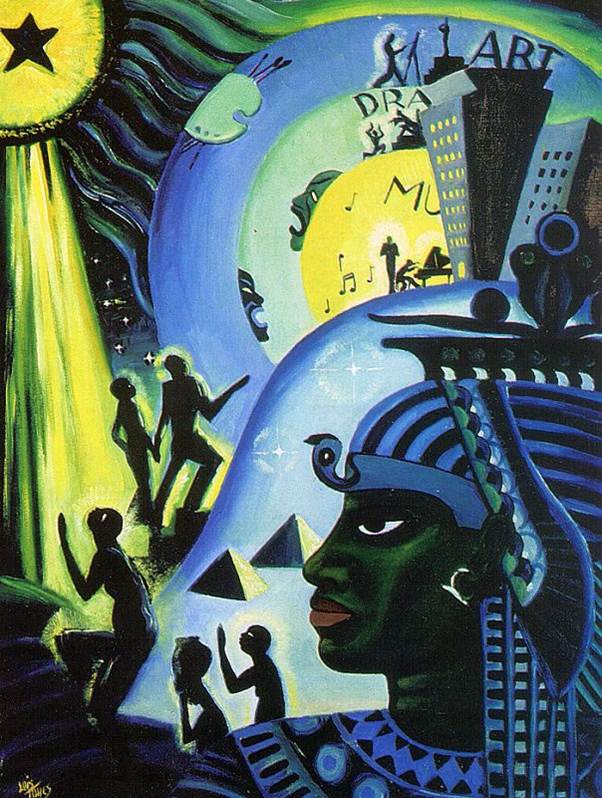
  • Reflections of black heritage in this painting >>>


  • What do these Headlines have in common?
“Hoover and Smith Campaign on Radio”

“Kennedy Passes Nixon in Polls After Televised Debate”

“Obama Raises Record Donations Using the Internet”

  • Describe these images


Monday, February 27, 2017

Weekly Post 2-27

APUSH
We will begin the 1920s this week with Immigration Restrictions and Roaring Commercialism. Begin reading Chapters 33-35 for a Reading Quiz March 7

US History
We will continue Black History Month with the Civil Rights Movement. We have a Vocabulary quiz Friday, March 3

Black History Vocabulary 4
1. Brown v. Board of Education
2. Civil Rights Act, 1964
3. Freedom Riders
4. “I have a Dream…” speech
5. Letter from a Birmingham Jail
6. military integration
7. SCLC
8. Sit-ins
9. SNCC
10. Voting Rights Act, 1965

Tuesday, February 21, 2017

Weekly Post 2-20

APUSH
We will begin looking at post-WWI America this week. We have a Vocabulary Quiz Friday over 1920s vocabulary found at Roaring 20s and Depressin 30s

US History
We will begin looking at African American History following WWII this week. RAFTS projects are due Wednesday. We have a Vocabulary Quiz Friday with historical figures from the movie, Boycott.

Black History Vocabulary III

  1. Martin Luther King, Jr. 
  2. Ralph David Abernathy, Jr. 
  3. Coretta Scott King 
  4. Rosa Parks 
  5. Raymond Parks 
  6. Bayard Rustin 
  7. E.D. Nixon 
  8. Rufus Lewis 
  9. W.A. Gayle 
  10. Claudette Colvin


Tuesday, February 14, 2017

Sunday, February 12, 2017

Weekly Post 2-13

APUSH
We will continue Period VII this week discussing the outcome of World War I and the impact on post-war America. We have a Reading Quiz Tuesday Chs 28-30. Individual McClure Magazines are due Friday, 2-17.

US History
We will finish Black History Month Part I this week. We will discuss the Great Depression and World War II. RAFTS will be introduced along with preparation for a test Friday, 2-17.

US HISTORY COMMON ASSESSMENT IX Study Guide
Black History 1877-1945

1. How did the Compromise of 1877 MOST affect Black Americans in the South?

2. How did Jim Crow laws control civic interaction?
 
3. How was the case of Plessy v. Ferguson pivotal in race relations in late 19th century America?

4. What did Booker T. Washington believe was the key to political and civil rights for African Americans?

5. Who was the first African-American to receive a Ph.D. from Harvard, help found the NAACP, and became a prominent leader in the early Civil Rights movement?

6. How did Booker T. Washington seek political and social equality?

7. How was the philosophy of W. E. B. DuBois reflected in the Niagara Movement?
 
8. How did the events of the 1910s lead to the “Great Migration” out of the South?

9. Which of the following was a major effect of World War I on American society in 1917 and 1918?

 10. What was true about many African Americans during World War I?

11. How was the “Harlem Renaissance” revolutionary?

12. Describe the Harlem Renaissance

13. How did Duke Ellington challenge cultural norms of the 1920s?

14. Describe black heritage in this painting


15. Whose works represent the Harlem Renaissance?

16. How did the “Harlem Renaissance” impact the new medium, motion pictures?

17. How did FDR’s New Deal help African American farmers of the South and Midwest?

18. A Phillip Randolph during World War II?

19. The “Double V” slogan meant victory over Germany abroad and over racism at home.

20. How did Eleanor Roosevelt affect African Americans during the Second World War?

This short answer questions is based on the excerpt below.
"Through his artistic efforts the Negro is smashing this immemorial stereotype faster than he has ever done through any other method he has been able to use.... He is impressing upon the national mind the conviction that he is an active and important force in American life; that he is a creator as well as a creature; that he has given as well as received; that he is the potential giver of larger and richer contributions....

"I do not think it too much to say that through artistic achievement the Negro has found a means of getting at the very core of the prejudice against him by challenging the Nordic superiority complex. A great deal has been accomplished in this decade of 'renaissance.'"
—James Weldon Johnson, poet and secretary of the NAACP, Harper's, 1928

Monday, February 6, 2017

Weekly Post 2-6

APUSH
We will continue Period VII this week, particularly discussing the Conservation Movement and US involvement in World War I. You need to continue working on your Magazine to turn in on appropriate due date. We will have another Reading Quiz (Chs 28-30) next week.

US History
We will continue our study of Black History this week. We will look at African Americans during World War I and the Roaring 20's. We have a vocabulary quiz Friday.
Vocabulary II
1.      “Black and Tans”
2.      “New Negro”
3.      Back to Africa movement
 4.      Duke Ellington
5.      Harlem Renaissance
6.      Jazz
7.      Langston Hughes
8.      Louis Armstrong
9.      Marcus Garvey
10.   New Orleans